

Jan 13, 2026
Tides, Elephants, and Salty Jelly Babies: 16km Down the Kariega
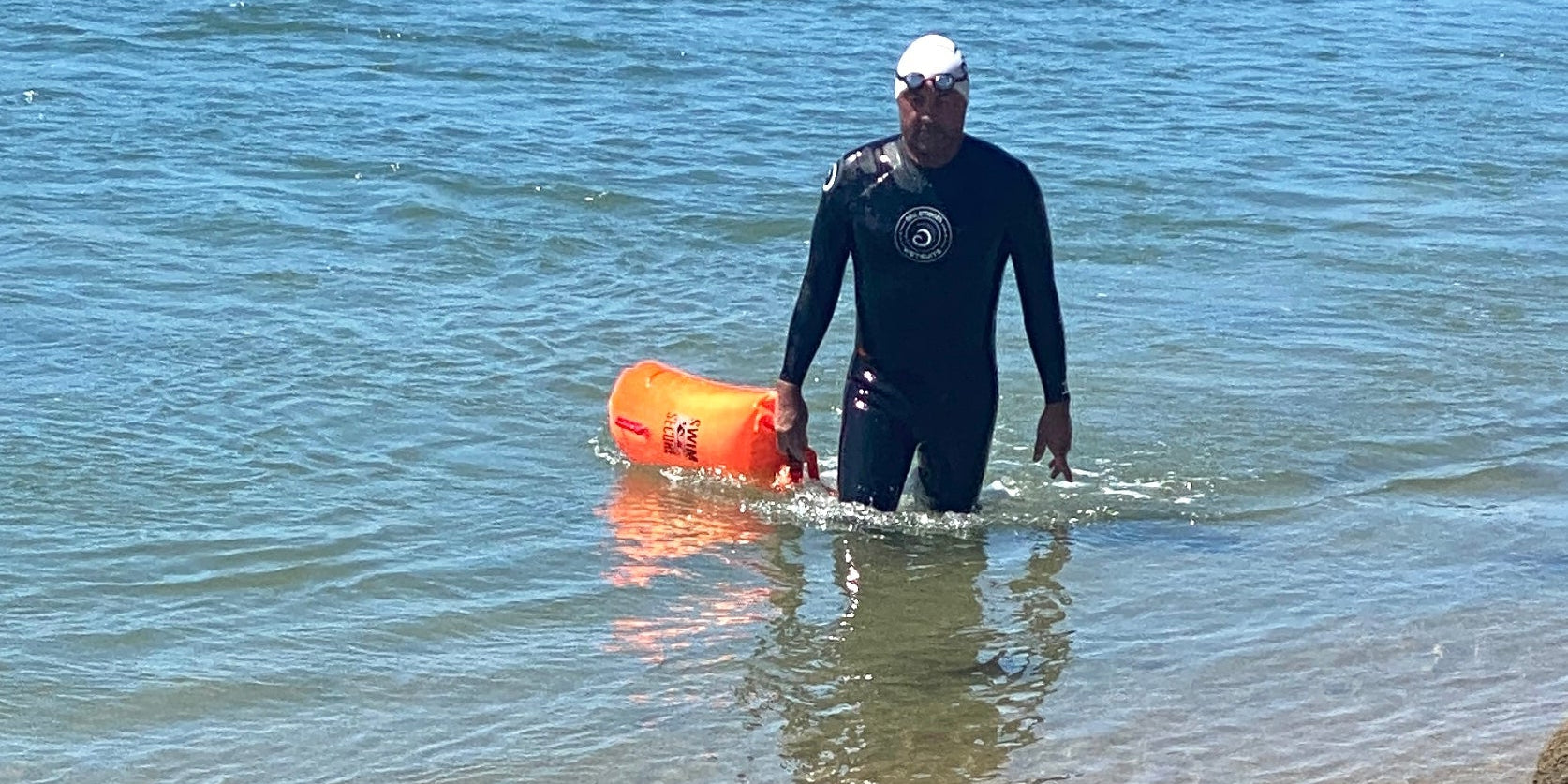
The plan was simple in concept but ambitious in execution: a 16-kilometre swim down one of South Africa’s most pristine rivers, starting at its highest navigable point and finishing at the mouth. Everything I needed would be dragged behind me, my supplies packed and floating faithfully in tow.
Reaching the start was an adventure in itself. A slow, careful drive along deeply rutted dirt roads eventually led me to “the causeway,” a quiet crossing on the edge of the Kariega Game Reserve. From there, I slipped into the water and began the long journey downstream, tracing a route that hugged the boundary of Sibuya Game Reserve and followed the river’s gentle, winding meander toward the sea.
The timing of the swim had been carefully planned around the tides. An outgoing tide would, in theory, offer a welcome push toward the finish. In reality, I knew the first six kilometres would provide little to no tidal assistance. Those early hours would be about patience and rhythm, settling into the swim and earning every metre before the river — and the ocean beyond — began to help carry me forward.
Two friends accompanied me on the journey — one on a paddleboard and the other on a surf-ski. Their presence was comforting, even though they were there purely for moral support. Knowing I wasn’t completely alone in such a remote stretch of river brought a quiet reassurance as the kilometres slipped by.
The scenery along the river was nothing short of incredible. Dense African bush pressed in from both banks, carrying that unmistakable earthy scent, and there were no signs of civilisation in any direction. It felt wild and untouched. The swimming conditions couldn’t have been better: no wind, glassy water, and a comfortably warm temperature that made it easy to settle into a steady, unhurried rhythm.
About three kilometres into the swim, my friend on the surf-ski suddenly waved me to a stop. He pointed toward the riverbank, where an elephant was calmly feeding from a tree, completely unfazed by our presence. I floated there for a moment, treading water and taking it in. Only in Africa.
We pushed on, sticking to the plan of reaching roughly five kilometres before taking a short break to refuel. Everything seemed to be on track, yet I was surprised to feel fatigue creeping in earlier than expected. It didn’t take long to identify the culprit. I had packed far too many supplies. My tow-float bag was heavy, and this being my first experience swimming while towing a fully loaded bag, my shoulders were starting to feel the strain.
Dumping supplies was not an option, so at the first stop I tried to lighten the load the only way I could — by eating as much as possible. Bananas, jelly babies, energy drinks… it was quite a mix. After a brief refuel, I set off again, with the next stop planned for the 10-kilometre mark.
By then, the outgoing tide was becoming far more noticeable — and very much appreciated. With a good distance still to cover and my arms growing increasingly tired, that subtle but steady push from the river felt like a small gift, helping carry me forward when I needed it most.
The stretch to the next refuelling stop turned into an exercise in discipline — maintaining rhythm, focusing on an efficient stroke, and managing fatigue. By now, I was really feeling it. My energy levels were dipping, my shoulders were sore, and the swim had become a mental battle as much as a physical one. Inevitably, the doubts started to creep in. Why am I doing this?
At this point, even the scenery began to fade into the background. The riverbanks, so captivating earlier, barely registered as all my attention narrowed to one thing: rounding what felt like a never-ending final bend and reaching the pre-planned feed stop.
Reaching the second stop brought a wave of relief. From here on, I knew the final six kilometres would come with meaningful assistance from the tide, its pull growing stronger as the river widened toward the mouth. Adding to that relief was the discovery that I hadn’t properly closed my tow bag earlier — a small mistake that had added unnecessary drag through this demanding section. Knowing that made the struggle make a bit more sense.
After fuelling up on the last of the bananas and the now slightly salty jelly babies, I pushed on once more. With my bag noticeably lighter and the ever-increasing pull of the outgoing tide, my spirits lifted. My arms were still tired, but I found a good rhythm again and, for long stretches, slipped into a deeply satisfying state of flow.
The river changes dramatically in this final section. Sandbanks begin to appear and the water clears, the river mud giving way to pale sea sand as the mouth draws closer. It felt like a quiet transition from river to ocean, each stroke carrying me toward the end of the journey.
Eventually, I passed beneath the bridge near the mouth. Just one kilometre to go. The excitement of knowing the finish was close broke my concentration, and with it the flow that had been carrying me along. My arms suddenly felt like lead and my energy tank completely empty as I limped toward the slipway — the final endpoint of the swim.
I was exhausted, but elated. My favourite river, conquered.
Author: Kevin Richards (March 2022)